
As growers look to diversify their operations and expand into alternative crops, pineapples are attracting renewed interest across Southern Africa. Yet one of the industry’s longstanding challenges remains access to clean, uniform planting material.
Traditionally, South African pineapple growers establish new fields using crowns, slips or suckers. Smooth Cayenne pineapples – the variety predominantly used for processing into juice and canned products – are often propagated from crowns obtained from factories, while Queen pineapples, prized for their sweet flavour and fresh market appeal, are typically replanted using slips and suckers harvested from existing plants.
While these methods have served the industry for decades, they also carry risks. Planting material sourced from established fields can harbour nematodes, diseases and viruses that are easily transferred from one generation to the next. Over time, this gradual build-up of pests and pathogens can contribute to declining yields, inconsistent fruit quality and increased dependence on crop protection interventions.
This is where tissue culture propagation is beginning to attract attention.
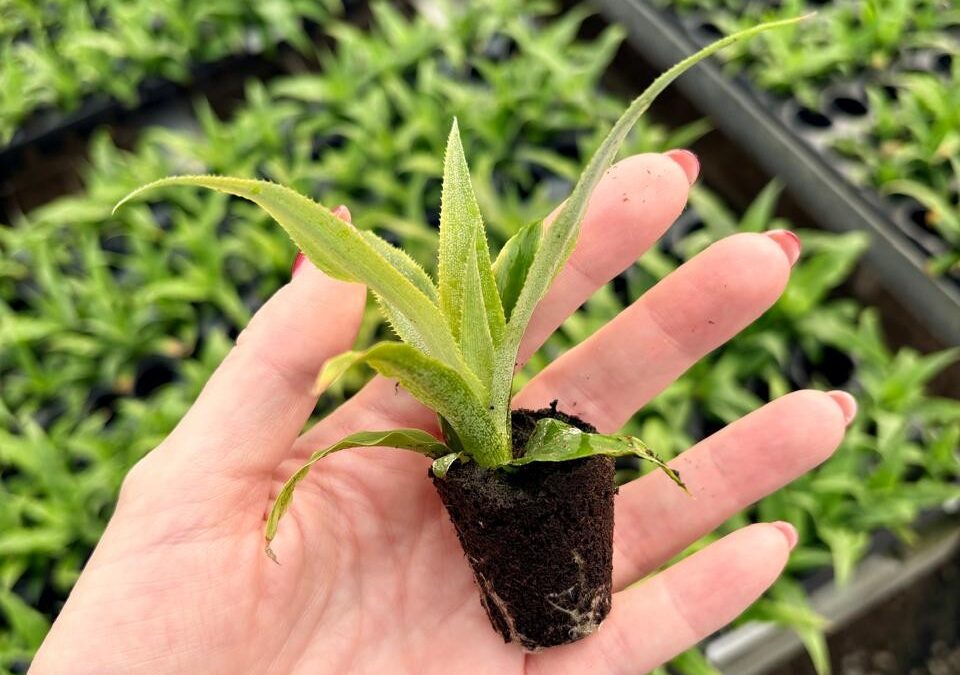
Already widely used in crops such as bananas, tissue culture involves multiplying plants under sterile laboratory conditions to produce disease- and virus-free planting material. The resulting plants are genetically identical to carefully selected mother plants, allowing growers to establish orchards with clean, uniform stock.
For producers considering pineapple expansion, the potential benefits extend beyond plant health.
Uniform planting material means fields establish more evenly, simplifying management practices such as irrigation, fertiliser application and scheduling of production activities. Harvest periods can become more synchronised. Tissue culture plants also develop a healthy root system before being planted in the field, enabling them to establish quickly and make use of water and nutrients sooner after transplanting.
South Africa’s two major pineapple varieties, Queen and Smooth Cayenne, have already been successfully propagated through tissue culture locally. Interest is also growing in newer varieties such as MD2, the sweet, golden-fleshed pineapple that has become the dominant cultivar in many export markets due to its eating quality and extended shelf life.
As producers explore opportunities in both domestic and regional markets, access to high-quality planting material may prove to be an important consideration in the success of new pineapple ventures.
Du Roi Laboratory, best known internationally for its banana tissue culture programme, has begun supplying tissue-cultured pineapple plants to growers within the SADC region.
For farmers evaluating pineapples as part of their future growth strategy, the conversation is increasingly moving beyond simply what to plant, to how those plants are sourced in the first place. In an industry where productivity and consistency are key, the quality of planting material can play an important role in determining yields and long-term profitability.
For more information, contact Du Roi Laboratory at info@duroilab.co.za or visit their website at www.duroilab.co.za